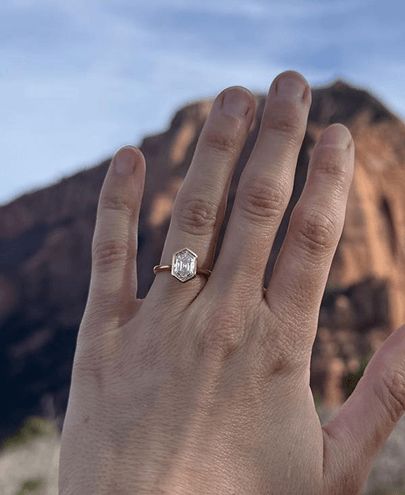
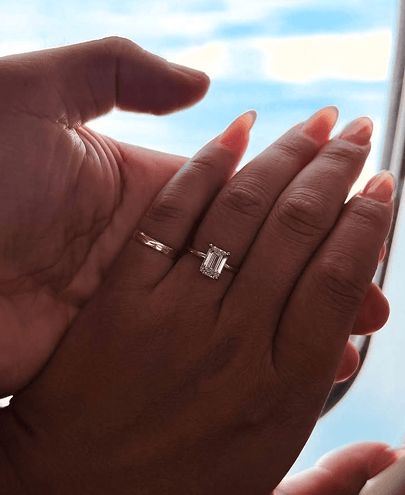
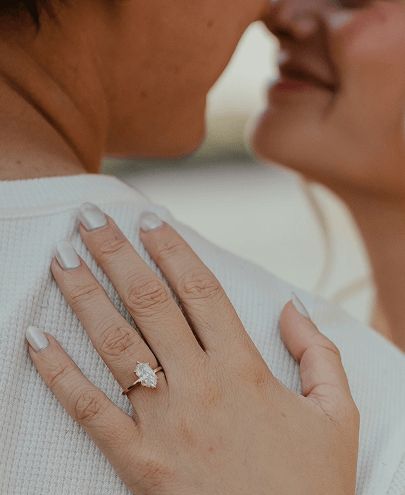
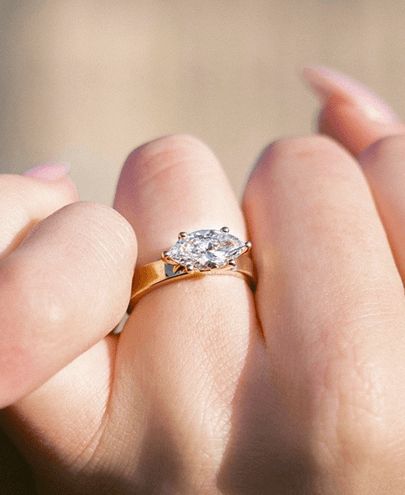
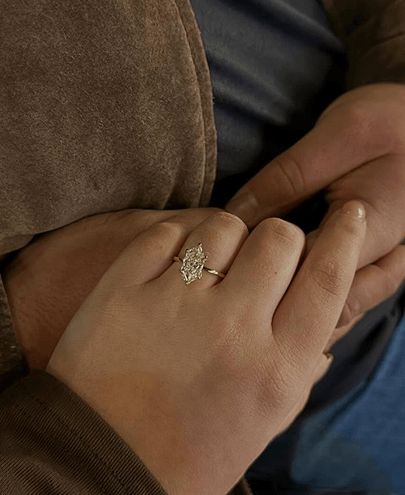
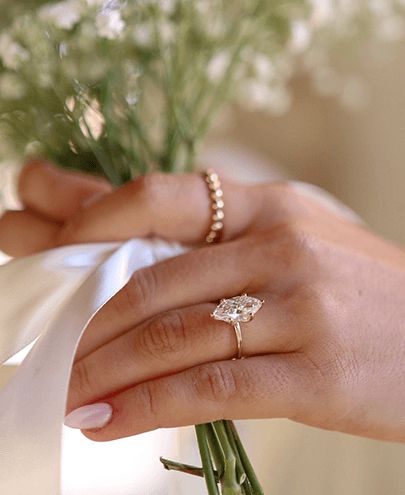
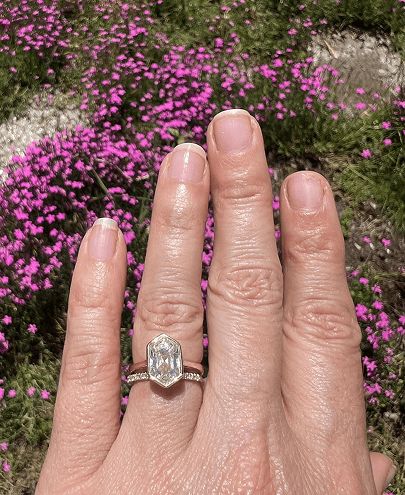
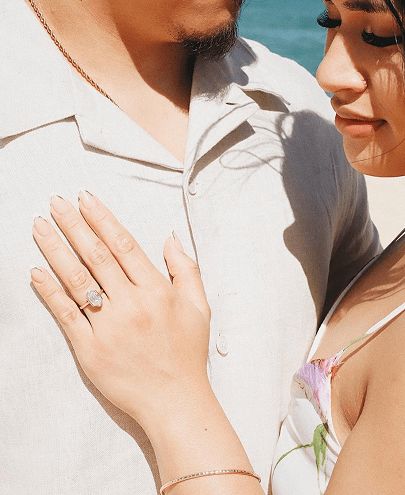
A diamond engagement ring with a marquise shaped center diamond

The 4Cs Of Diamonds Guide

A diamond engagement ring with a marquise shaped center diamond

The 4Cs Of Diamonds Guide

Shopping for a diamond? You’ve probably heard of the 4Cs, cut, color, clarity, and carat, the universal standard for grading diamonds. At Shane Co., we’ve been sourcing diamonds long before the 4Cs existed, and we know it’s not just a science, it’s an art.

Expert guidance from Your Friend & Jeweler: We’ve been experts in diamonds for nearly 100 years and counting. We source directly from trusted industry leaders we've partnered with for generations. Every diamond is hand-selected no matter the cut, carat, or grade, so your engagement ring is always the most beautiful.

What are the parts of a diamond?

A diamond consists of several key anatomical parts, from the table to the pavilion. A diamond’s anatomy determines how it interacts with light and ultimately how it sparkles.


Each part works together to create brilliance (white light), fire (rainbow light), and scintillation (sparkle).

Drag to rotate

These elements form the foundation of the 4Cs. At Shane Co., we evaluate how all of these elements work together, not just individually, to select diamonds that truly stand out. 

Three diamond engagement rings with different shaped center stone diamonds

How are diamonds graded?

Shane Co. diamonds are graded by one of four grading labs that use the same or very similar rigorous grading systems. Diamonds are graded using the 4Cs: cut, color, clarity, and carat.

  • At Shane Co., our experts draw on generations of experience to hand-pick diamonds for how they reflect light, sparkle, and come to life in your engagement ring, so your only job is choosing the one that speaks to you.
Three diamond engagement rings with different shaped center stone diamonds

What does diamond cut mean?

The cut of a diamond determines its shape and sparkle. Some cuts are named after their shape, like round, pear, or hexagon. Others are well-known industry terms, like the princess cut (square) or the emerald cut (a longer, step-cut shape).


But cut isn’t just the shape, it refers to how well a diamond is proportioned and how the facets are cut to maximize light reflection. The better the cut, the more light it returns, and the more it shines in your engagement ring!


You might hear terms like Ideal, Excellent, Very Good, Good, Fair, or Poor. These are part of the cut grading scale used to evaluate a diamond's quality.

At Shane Co., we prioritize cut above all else. Beyond the grades, our experts choose diamonds for their beauty, so whichever one catches your eye, you know it's truly exceptional. 

Three diamond engagement rings with different shaped center stone diamonds

Diamond Cut Grade Scale

A diamond engagement ring with an oval shaped center diamond

What does diamond color mean?

Color measures how white or warm a diamond appears. Most diamonds look colorless to the eye, and the differences between grades can be subtle.


In many cases, setting and lighting influence how color shows up more than the grade itself.

At Shane Co., we carefully select the most beautiful diamonds across every color grade, because the best color is the one you love most.

Diamond Color Scale

Discover why two diamonds with the same grades can look completely different in real life.

Three diamond engagement rings with different shaped center stone diamonds

What does diamond clarity mean?

Clarity refers to the natural markings inside a diamond, called inclusions, you can think of them as your diamond’s natural birthmarks. Most are microscopic, so what matters most is how the diamond looks to you.


Two diamonds with the same clarity grade can still look different depending on the number of inclusions they have and where they organically appear.

At Shane Co., we focus on choosing the best diamonds, so you get the best possible appearance within each grade.

A pair of jewelers tweezers holding a loose round diamond

Diamond Clarity Scale

Drag to rotate

A diamond engagement ring with a cushion cut center diamond

What does diamond carat mean?

Carat refers to a diamond’s weight, not its visible size.


Two diamonds with the same carat weight can appear different in size depending on their cut. For example, oval and emerald-cut diamonds often appear larger than a round brilliant diamond of the same carat weight because they have a larger face-up appearance.

At Shane Co., we have the largest in-stock diamond selections, so you can compare different carat weights and diamond shapes side by side to find the look you love and the size that fits your budget.

Diamond Carat Size Chart

Model Ring Size 6.5

Carat Sizes by Shape

Learn how cut, color, clarity, and carat work together to determine a diamond's beauty and value.

A collection of different shaped diamonds on a white background.

How are Shane Co. diamonds better?

We’ve been a family jeweler in the diamond business for almost 100 years and counting. Tom Shane, third generation owner, invented an unprecedented way of sourcing diamonds and offering them to customers. This is still how we do business today.


  • We get first pick: We source directly from trusted industry leaders we've partnered with for generations. They reserve the best stones just for us.
  • Widest selection: Whether you’re shopping in-store or online, you can trust that every single diamond has been hand-picked and vetted by our experts to be the most beautiful.
  • You get the best value possible: We negotiate on your behalf and pay our partners in cash, which means we don’t pay interest, so you don’t pay interest.


Plus, every engagement ring comes with our All-Inclusive Free Lifetime Warranty℠. It covers everything, including your center stone.


Our Easy Trade-Up Program℠ makes it simple to trade in your diamond when you’re ready to go bigger or try a completely new style.

A raw uncut diamond next to a finished cut round diamond

How are Shane Co. diamonds better?

We’ve been a family jeweler in the diamond business for almost 100 years and counting. Tom Shane, third generation owner, invented an unprecedented way of sourcing diamonds and offering them to customers. This is still how we do business today.


  • We get first pick: We source directly from trusted industry leaders we've partnered with for generations. They reserve the best stones just for us.
  • Widest selection: Whether you’re shopping in-store or online, you can trust that every single diamond has been hand-picked and vetted by our experts to be the most beautiful.
  • You get the best value possible: We negotiate on your behalf and pay our partners in cash, which means we don’t pay interest, so you don’t pay interest.


Plus, every engagement ring comes with our All-Inclusive Free Lifetime Warranty℠. It covers everything, including your center stone.


Our Easy Trade-Up Program℠ makes it simple to trade in your diamond when you’re ready to go bigger or try a completely new style.

FAQ

What are the 4Cs of diamonds?

+

Which of the 4Cs is most important when choosing a diamond?

+

What are diamonds made of?

+

How do the 4Cs affect a diamond’s price?

+

What’s the best balance of the 4Cs for an engagement ring?

+

Does diamond cut matter more than color or clarity?

+

What clarity grade is considered “eye clean?”

+

What diamond color grade looks best in white gold or platinum?

+

Do different diamond shapes affect which of the 4Cs matter most?

+

How can I choose the right 4Cs on a budget?

+

How are diamonds graded?

+

What is diamond certification?

+

Does Shane Co. consider fluorescence when selecting diamonds?

+