Rachel Nipp
Recent research shows that the jewelry market in the U.S. is valued at around $63 billion and is estimated to rise to $332.6 billion by 2026. So from trendy pieces to heirloom gifts to classic everyday pieces, it’s clear we love jewelry. But out of all 50 states, which is the most jewelry-obsessed?
To find out, we surveyed 2,000 U.S. adults to reveal their jewelry-wearing habits, how much they spend on jewelry annually, the variety of styles they own, how often they wear different items, their jewelry knowledge, and their interest in jewelry-related content. We then combined this with Google search volumes for various jewelry items, from wedding bands and engagement rings to bracelets and necklaces, to create a weighted index. Each state was then ranked based on its survey results and search volumes, resulting in a final average score out of 10 to identify the most jewelry-obsessed state.
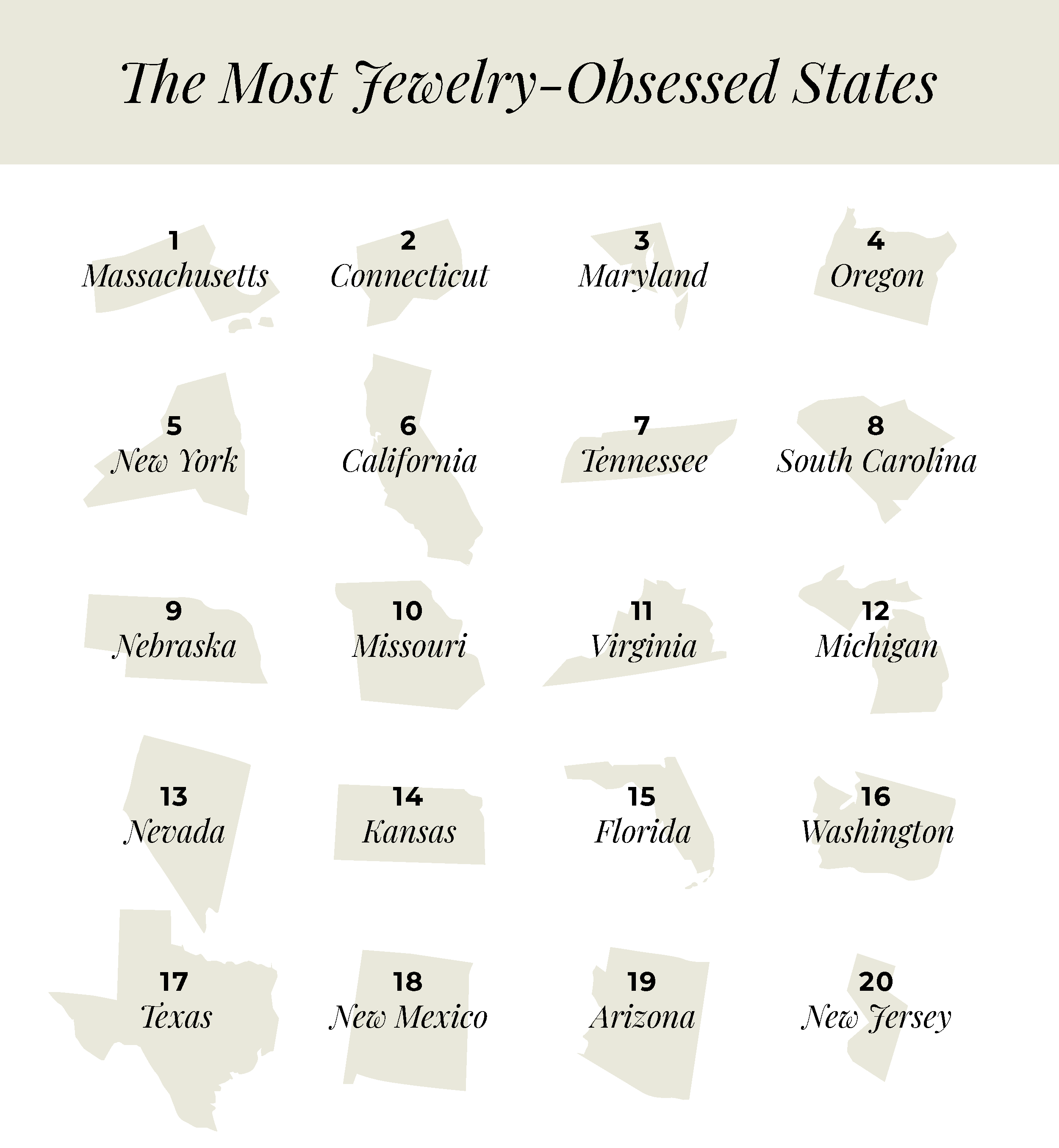
The most jewelry-obsessed states in the US
| Rank | State | Average score |
| 1 | Massachusetts | 6.90 |
| 2 | Connecticut | 6.84 |
| 3 | Maryland | 6.72 |
| 4 | Oregon | 6.34 |
| 5 | New York | 6.27 |
| 6 | California | 5.91 |
| 7 | Tennessee | 5.87 |
| 8 | South Carolina | 5.86 |
| 9 | Nebraska | 5.85 |
| 10 | Missouri | 5.84 |
| 11 | Virginia | 5.62 |
| 12 | Michigan | 5.61 |
| 13 | Nevada | 5.47 |
| 14 | Kansas | 5.45 |
| 15 | Florida | 5.40 |
Massachusetts
Of all the U.S. states, those from Massachusetts are the most jewelry-obsessed, scoring 6.9 out of 10. Not only do they own a wide range of jewelry, from heirlooms to personalized pieces (the most of any state), over 60% of residents wear jewelry every day. The state also takes styling their jewelry seriously, as over half of residents also admit to changing their jewelry based on their outfits.
Connecticut
Connecticut takes second place with an overall score of 6.8 out of 10. Residents here have some of the largest jewelry budgets in the country, spending an average of $260 annually on personal jewelry. And when it comes to gifting, they are even more generous, spending $430 on jewelry gifts each year — the highest in the country.
Maryland
Maryland ranks third, with a score of 6.7. Not only do people in this state own a wide range of jewelry, favoring fine jewelry in particular, they are also the state that enjoys jewelry-related content the most. From learning about the latest trends on social media to reading about gemstones in books and magazines, 50% of residents say they consume this content.
Oregon
In fourth place is Oregon, with a score of 6.3 out of 10. Their high rank is mainly thanks to Oregon being the state most likely to wear jewelry every day, as 80% say they do. People here also seemingly have a deep love for gemstones, as they make the most Google searches for gemstone-related terms, from shopping for new gemstone pieces to researching their healing properties.
New York
Rounding out the top five is New York, with a score of 6.2. New Yorkers spend more than any other state on jewelry for themselves, treating themselves to an average of $271 worth of jewelry per year. They are also keen to style the pieces they purchase, as over 50% say they will change their jewelry based on their outfit.
How much do Americans spend on jewelry?
In addition to discovering where in America is home to the most jewelry-obsessed people, we also wanted to dive into who invests in their jewelry collection the most.
Our survey revealed that people are spending an average of $360 on jewelry each year, whether for gifting others or buying for themselves.
However, men actually spend more on themselves than women do, with men spending $442 each year, while women spend just over half of this, at $279 per year. Men also spend more on gifting ($223), than women do ($131).
When it comes to gifting jewelry to others, people in Connecticut are the most generous, spending a staggering $431 per year on average. In second place is South Carolina, spending $254, then Massachusetts (the most jewelry-obsessed state overall) comes third, spending $241 per year. On the flip side, people in Alabama spend the least, spending just $70 per year on jewelry gifts for others.
How and when do Americans gift jewelry?
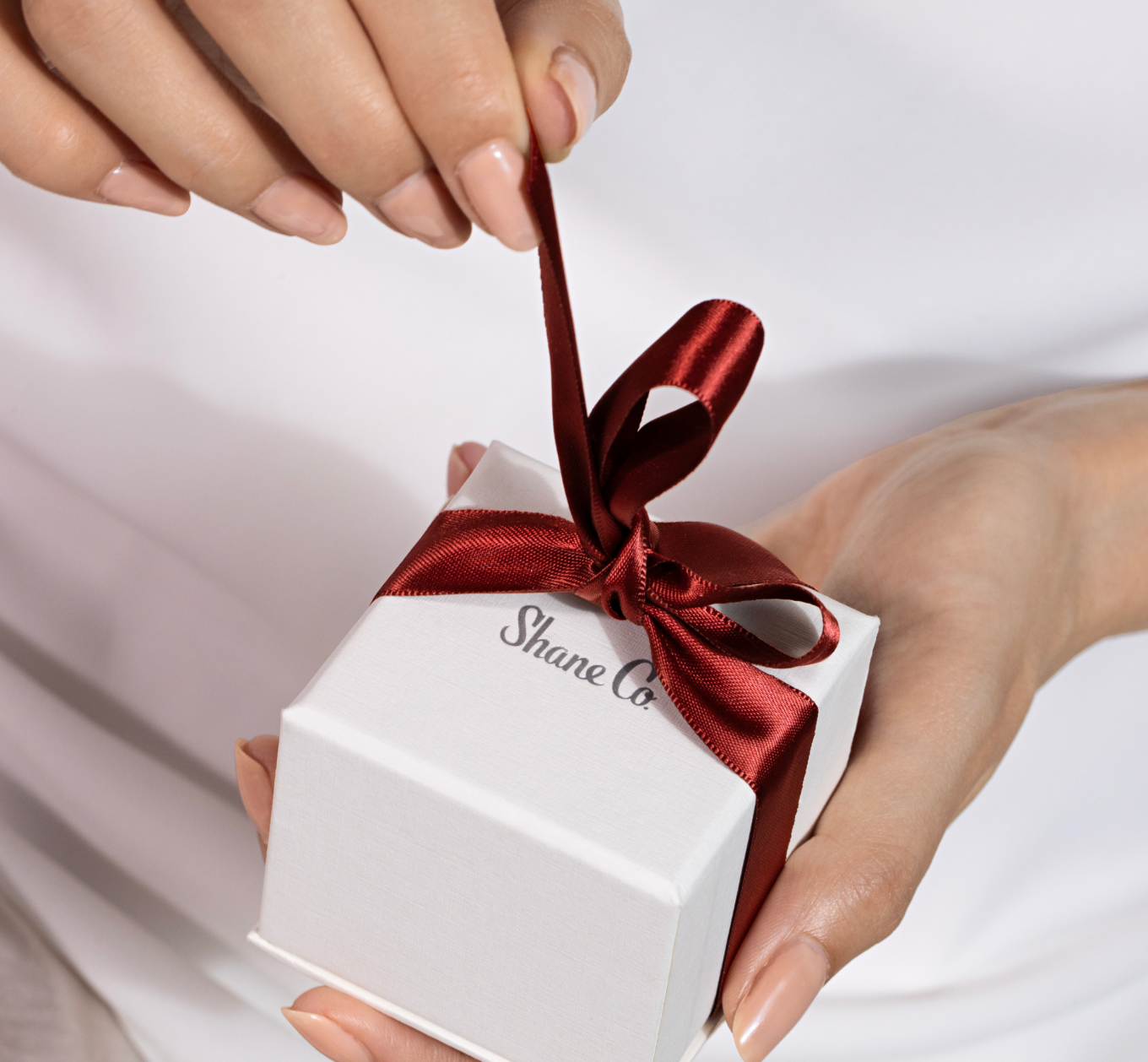
From passing down an heirloom engagement ring to purchasing your children their first piece of fine jewelry for graduation, gifted pieces can hold so much value in sentiment. But when is it common to receive your first sentimental gift of jewelry? And from who?
Heirloom jewelry: 17 years old
Heirloom jewelry consists of pieces that are passed down through generations, often loved for their sentimental value and historical significance. These items can include wedding and engagement rings, necklaces, and charms that once belonged to family members.
According to our survey, the average age people receive their first piece of heirloom jewelry is 17 years old, perhaps due to parents or grandparents handing down items as a “coming of age” tradition. Most people receive heirloom jewelry from their mothers, with 57% of people stating this, and a further two-fifths (40%) saying they received one from their grandmother, and 17% from their father.
Fine jewelry: 13 years old
The average age at which Americans receive their first gift of fine jewelry is 13 years old. However, that hasn’t always been the case, as the age varies by generation, with younger respondents (aged 16-26) saying they received their first piece of fine jewelry under the age of 10. In contrast, those aged 60 and older were gifted their first piece of fine jewelry later, at around 18 to 23 years old.
This may be due to gifting trends changing over time, as the norms around gifting jewelry have changed. Today, it’s more common to give jewelry for a wider range of occasions, including childhood milestones like baptisms and birthdays. It could also be because of increased affordability over time, as older generations might have needed to wait longer until they were able to afford, or find, a special piece of jewelry.
How to choose the perfect jewelry gift
Gifting jewelry is a beautiful way to show someone you care for them, whether it’s a new piece of fine jewelry, a personalized piece, or an heirloom item to be passed down through generations. We’ve created some tips to help you choose the perfect jewelry gift.
Consider who you’re buying for
Before you buy jewelry for someone, whether it’s a birthday present or an engagement ring, think about what the giftee likes and what their style is.
Pay attention to their existing style and what they wear day to day. For example, some people prefer silver jewelry to gold and vice versa. Some prefer more minimalist pieces, while others prefer statement pieces.
What’s the occasion?
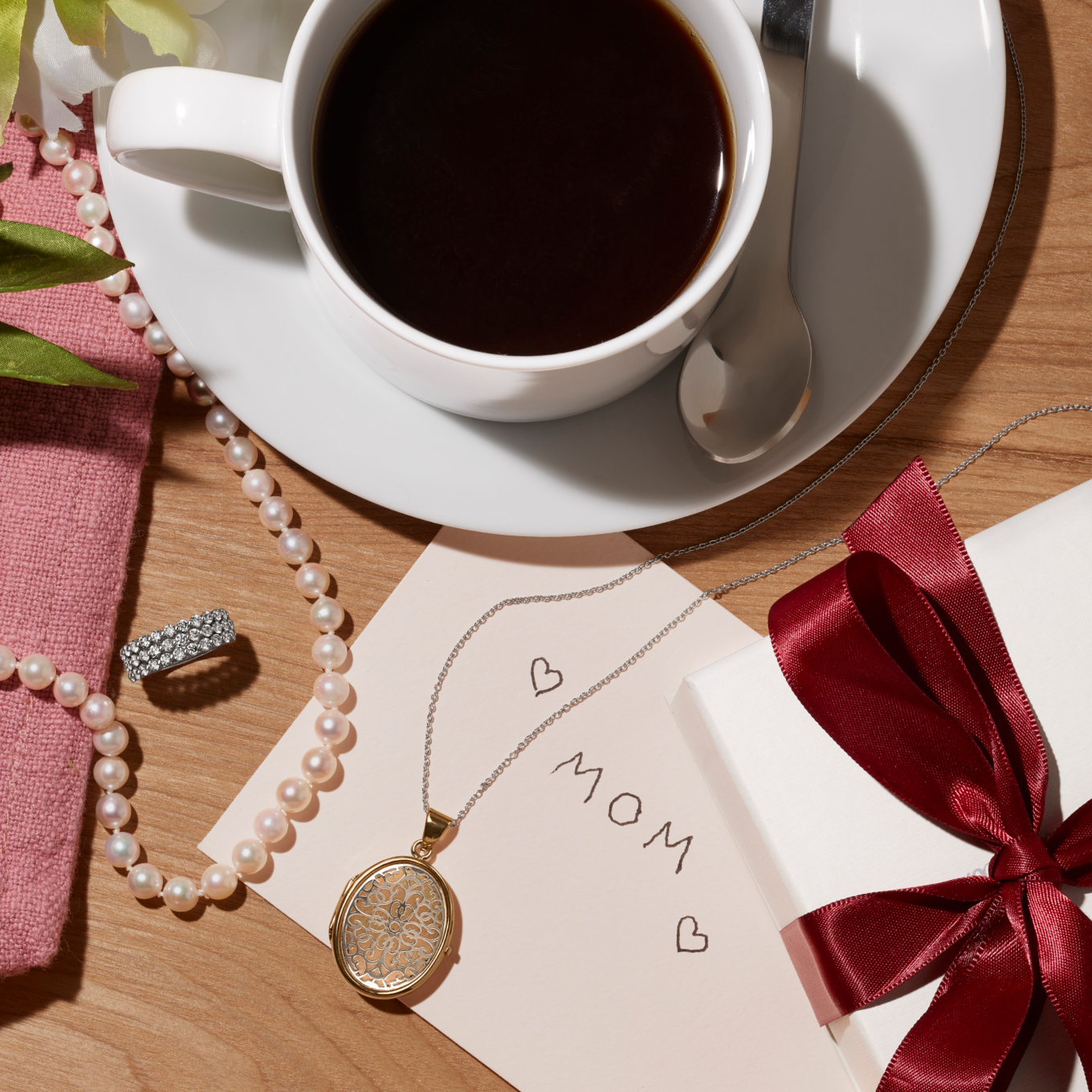
Think about tailoring your gift to the occasion. For example, for major milestones, you might want to choose a timeless or high-quality piece. If you’re buying an engagement ring, think carefully about the style and what your partner likes before popping the question.
For anniversaries, you could choose a gift that aligns with the number of years you’ve been married, such as pearls to celebrate 30 years together. For birthdays or holidays, more playful and versatile items, like charm bracelets or trendy earrings, can be appropriate.
Set a budget and stick to it
Determine how much you’re willing to spend and keep to this budget. For major milestones, you may want to consider spending a little more than you would for other occasions.
And remember, a more affordable, well-thought-out gift can often be more appreciated than an expensive, impersonal one. The sentiment behind the gift is what truly matters.
Add a unique touch
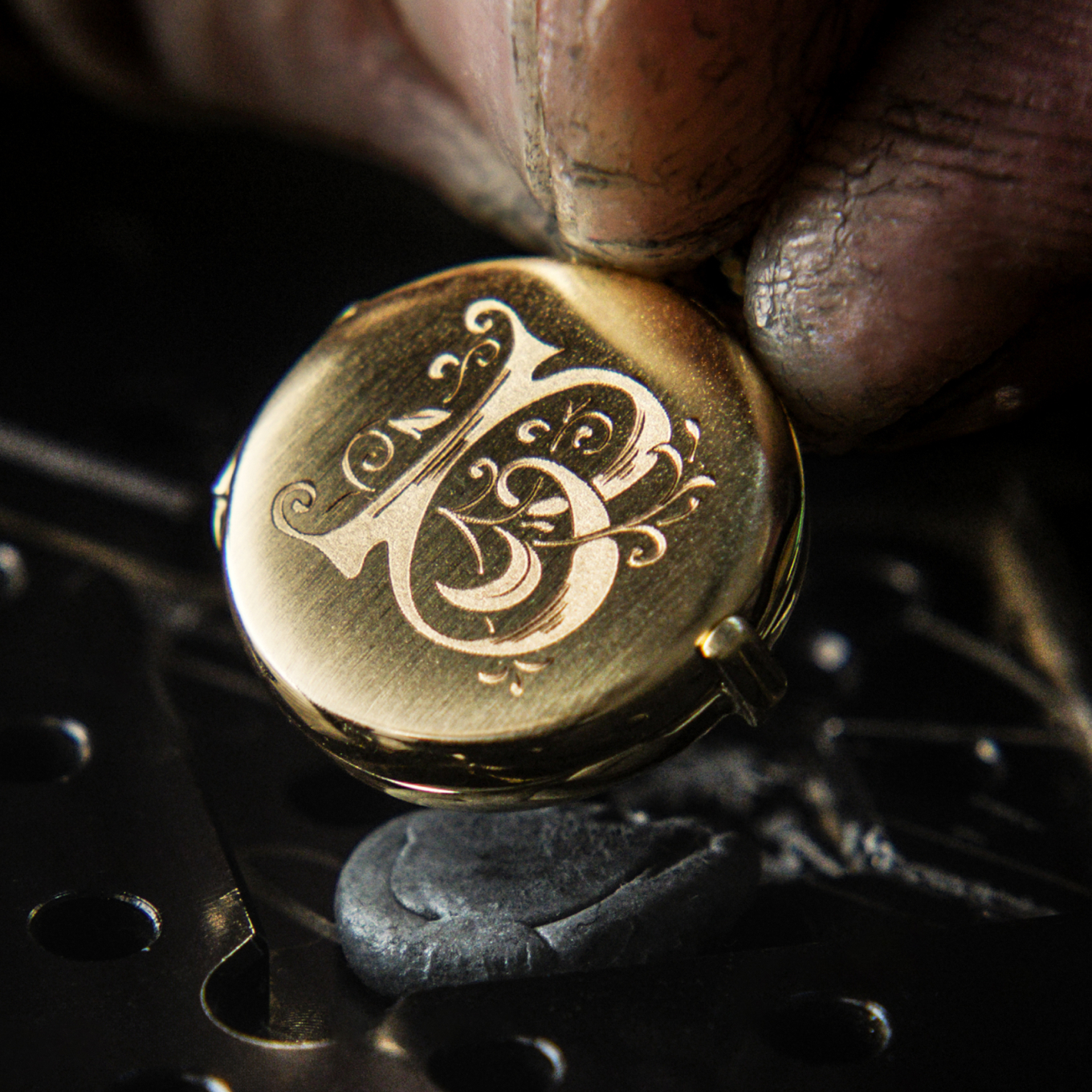
Consider adding a unique touch to your gift with personalized or engraved jewelry. Gemstone gifts are also a great option; you can buy someone jewelry set with their favorite gem or even their birthstone.
Methodology
We surveyed 2,000 Americans in May 2024.
To determine the most jewelry-obsessed states, we created and ranked a weighted index by combining state-specific survey results and search volume data for different jewelry-related terms over the last 12 months in each state, using Google Keyword Planner.
Some states were excluded due to lack of data.
Jewelry industry statistics source: Statista
Fair use
If you would like to use this data, you are welcome to share any of the information or graphics above for non-commercial purposes. Please include a link to this page in your article when referencing the material.
 Brianna Blair
 Anna Gionet
 Rachel Nipp